

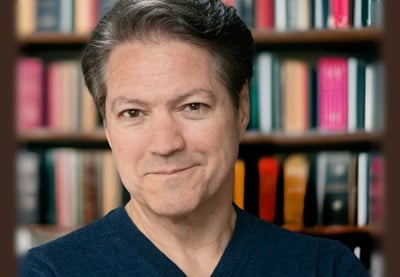
"The best kind of challenge—telling the story clearly."



Recent audiobooks




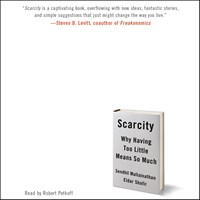
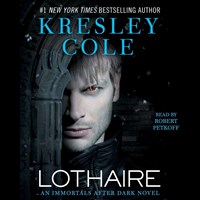
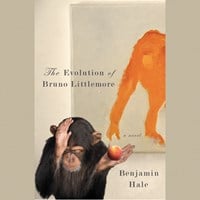
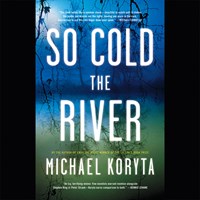
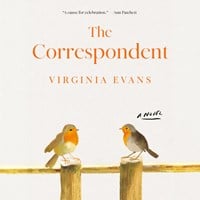
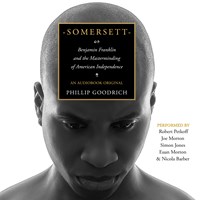


Robert's Accolades
The Correspondent AudioFile Best of 2025 Multi-Voice
Bad City AudioFile Best of 2022 Nonfiction & Culture
Somersett AudioFile Best of 2021 History & Biography
Wicked Abyss AudioFile Best of 2017 Romance
The Kingdom Of Speech AudioFile Best of 2016 Nonfiction & Culture
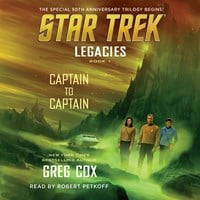
Captain to Captain: Star Trek Legacies, Book 1 AudioFile Best of 2016 Science Fiction
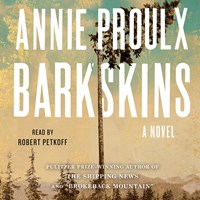
Barkskins AudioFile Best of 2016 Fiction
Twain & Stanley Enter Paradise AudioFile Best of 2015 Historical Fiction
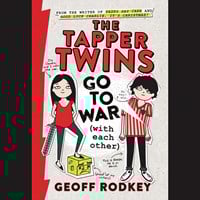
The Tapper Twins Go to War (With Each Other) AudioFile Best of 2015 Children
Those Who Wish Me Dead AudioFile Best of 2015 Mystery & Suspense
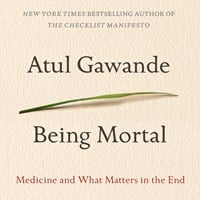
Being Mortal: Medicine and What Matters in the End AudioFile Best of 2014 Contemporary Culture
Social Physics: How Good Ideas Spread—The Lessons from a New Science AudioFile Best of 2014 Contemporary Culture
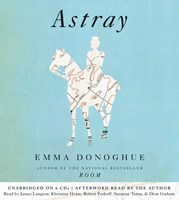
Astray AudioFile Best of 2013 Fiction
You Have to Stop This AudioFile Best of 2011 Children
The Evolution of Bruno Littlemore AudioFile Best of 2011 Fiction
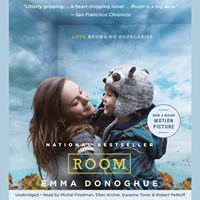
Room AudioFile Best of 2010 Fiction
This Book is Not Good for You AudioFile Best of 2010 Children
Podcasts
Talking with Robert Petkoff
In June 2024, Robert Petkoff was inducted as a Golden Voice, AudioFile's lifetime achievement honor for audiobook narrators.
How did you get started with narrating?
I got a call from my commercial VO agent one day asking if I would be interested in narrating audiobooks. Hachette was seeking new narrators. I said yes and was off and running. I was surprised by how much vocal stamina it took but also I had so much fun with all the voices and dialects that I was hooked. My first book for Hachette was BEAT THE REAPER by Josh Bazell, which earned me an Audie nomination for Best Male Narrator, so it was an exciting start for me.
Do you approach narrating fiction and nonfiction differently?
I do approach narrating fiction and nonfiction differently. With fiction I read the book first to get a sense of tone and then go through and highlight each character's dialogue with a different color, so when I'm recording I can know which character is speaking next and have their voice ready. It makes it easier for me. I make notes about dialect and even recordings in iAnnotate to listen to when I need it.
With nonfiction I have started using Pozotron to "read the script for me." It goes through and finds all complex names and words that I might have to research for pronunciation. Then I can cold-read the manuscript while narrating. My approach is to try and narrate nonfiction as if I'm just telling someone about this cool thing I've learned. I want to blend a conversational tone with a little better diction than I might use in an everyday conversation.
What’s the most interesting piece of research you’ve done for an audiobook?
This is a tough question because research always sends me down a rabbit hole of so many interesting topics and subjects. I love learning new things, especially on subjects that I wouldn't normally seek out, so this is one the greatest things about narrating. Off the top of my head, I remember researching the different languages that some of the characters speak in Kira Jane Buxton's HOLLOW KINGDOM as a really interesting challenge. Having to learn how to speak Arabic or Thai accurately enough to be convincing required moving beyond the internet and reaching out to friends who speak those languages and recording them.
What has surprised you the most about your work in audiobooks?
I think what surprises me most is the sheer number of titles that I've narrated that I wouldn't have necessarily sought out to read on my own, but that have grabbed my attention and taught me things and moved me in ways I didn't expect. It's the most exciting thing about narrating: discovering new authors and new stories that I might not have found otherwise.
___________________________
See also:
Talking with Narrator Robert Petkoff | Interview with Sandi Henschel AUDIOFILE EDITORS | SEPTEMBER 15, 2022
5 Questions with Narrator Robert Petkoff | Interview with CANDACE LEVY | OCTOBER 23, 2019
Videos
Photo courtesy of narrator